Damp and rising damp in Marrakech riads
Damp wall stains, blistering paint, damaged plaster or recurring marks? In a riad, several causes can look similar. We establish where the water comes from before proposing treatment.
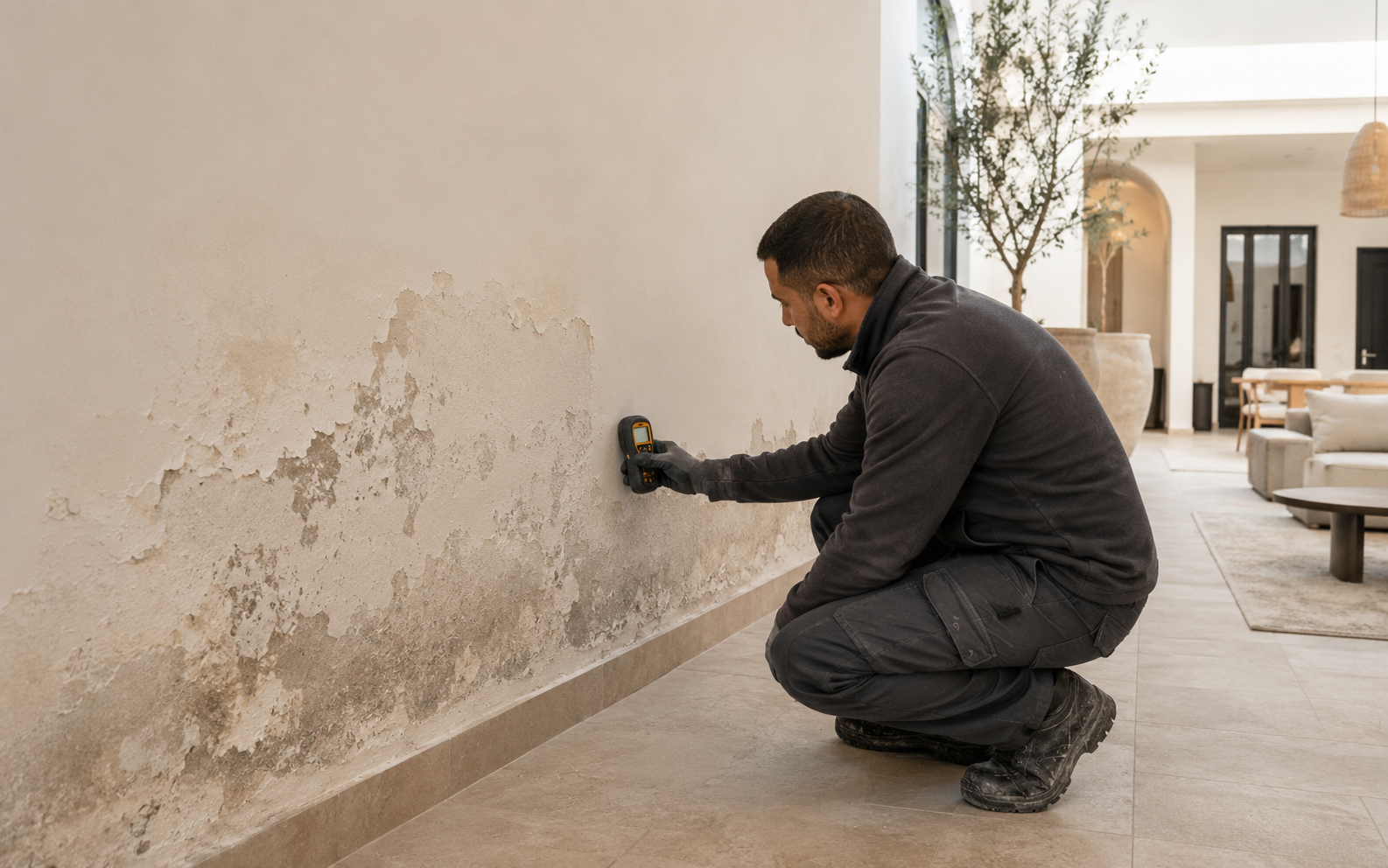
A damp wall in a riad does not always have the same cause
In Marrakech riads, damp at the base of walls, salt deposits, damaged plaster and blistering paint are often associated with rising damp. Water gradually rises through the masonry and damages visible finishes.
Treatment consists of stopping moisture rising through the wall, then repairing damaged plaster to restore clean, durable walls.
Where does damp appear in your riad?
Before discussing treatment, we assess how the problem presents. The location of marks guides diagnosis without jumping to conclusions.
Salt deposits return near the floor
When damage is concentrated at the base of walls, rising damp is one possible cause. However, we must confirm that water actually comes from the ground before choosing treatment.
The mark comes from the ceiling or descends from the top of the wall
Here we investigate ingress from the roof, an upstand, connection or another water entry point above the visible area.
See roof leak repair
Damp remains concentrated in one area
Highly localised damp may come from a leak, connection, pipe or nearby water penetration. Rising damp injection would not resolve that cause.
Find the water source before replastering
If marks return despite repairs, tell us where they appear and how long they have been present. We help identify the next useful step.
Riad finishes cost too much to hide the problem
Repainting, replastering or repairing tadelakt can improve a wall temporarily. But if moisture continues to arrive, the new finish will also deteriorate.
The logical order is to treat the cause, allow the wall to reach a condition suitable for repair, then restore the necessary finishes.
How we approach damp problems in a riad
The aim is not to apply the same treatment to every damp wall. We follow a sequence that lets us select work based on the observed cause.
Assess the marks
Height, location, extent and progression provide the first clues.
Inspect the surroundings
We consider the roof, courtyard, water points, neighbouring walls and previous repairs.
Identify the probable cause
We distinguish rising damp, water ingress, leaks and other moisture sources.
Define the treatment
Work is selected according to what is actually supplying moisture and the wall's condition.
Treatment changes with the moisture source
Two similar-looking walls may need completely different work. This is particularly important in a riad where several water sources may coexist.
An injected damp-proof barrier may be considered to limit moisture rising from the wall base. Damaged plaster is then repaired at the appropriate time.
The priority is to stop water entering at its source. Repairing only the inside face will not resolve ingress that continues to supply water to the masonry.
The leak must be repaired before finishing work. Wall treatment then depends on its condition and accumulated moisture.
Where a riad has several problems, work must be organised in the right order rather than treating each stain separately.
Your riad has been repainted but damp returns?
Before renewing the finishes again, establish what is supplying water to the wall and price the corresponding treatment.
Damp treatment prices for a riad
The prices below cover the main treatments. The final quotation depends on the number of affected walls, extent of repairs and finishes involved.
Damp in Marrakech riads: your questions
Why are my riad walls damp at the bottom?
Marks at the base may suggest rising damp, but it is not the only possibility. A leak, nearby ingress or another water supply can produce similar symptoms. Identify the cause before treatment.
How can I tell whether it is really rising damp?
The height and distribution of marks provide clues but are not always sufficient. The wall's surroundings, changes over time and other possible water sources in the riad must also be inspected.
Should every damp wall in a riad be injected?
No. An injected barrier is an option when rising damp is actually identified. If moisture comes from ingress or a leak, treatment must address that cause.
Can tadelakt or paint be renewed immediately after treatment?
Not always. A wall with accumulated moisture may need time before certain finishing repairs. The appropriate timing depends on its condition and the treatment carried out.
Can damp come from the riad roof?
Yes. Marks higher up, below ceilings or after rain may suggest ingress from the roof or a connection. Water entry must then be treated before repairing the internal wall.
Do you only work in the Medina?
No. We treat damp and rising damp in riads and other homes across Marrakech, depending on the location and nature of the work.