Damp walls & rising damp in Marrakech
Damp walls, salt deposits, blistering paint or recurring stains? We identify the cause and propose the treatment your wall actually needs.
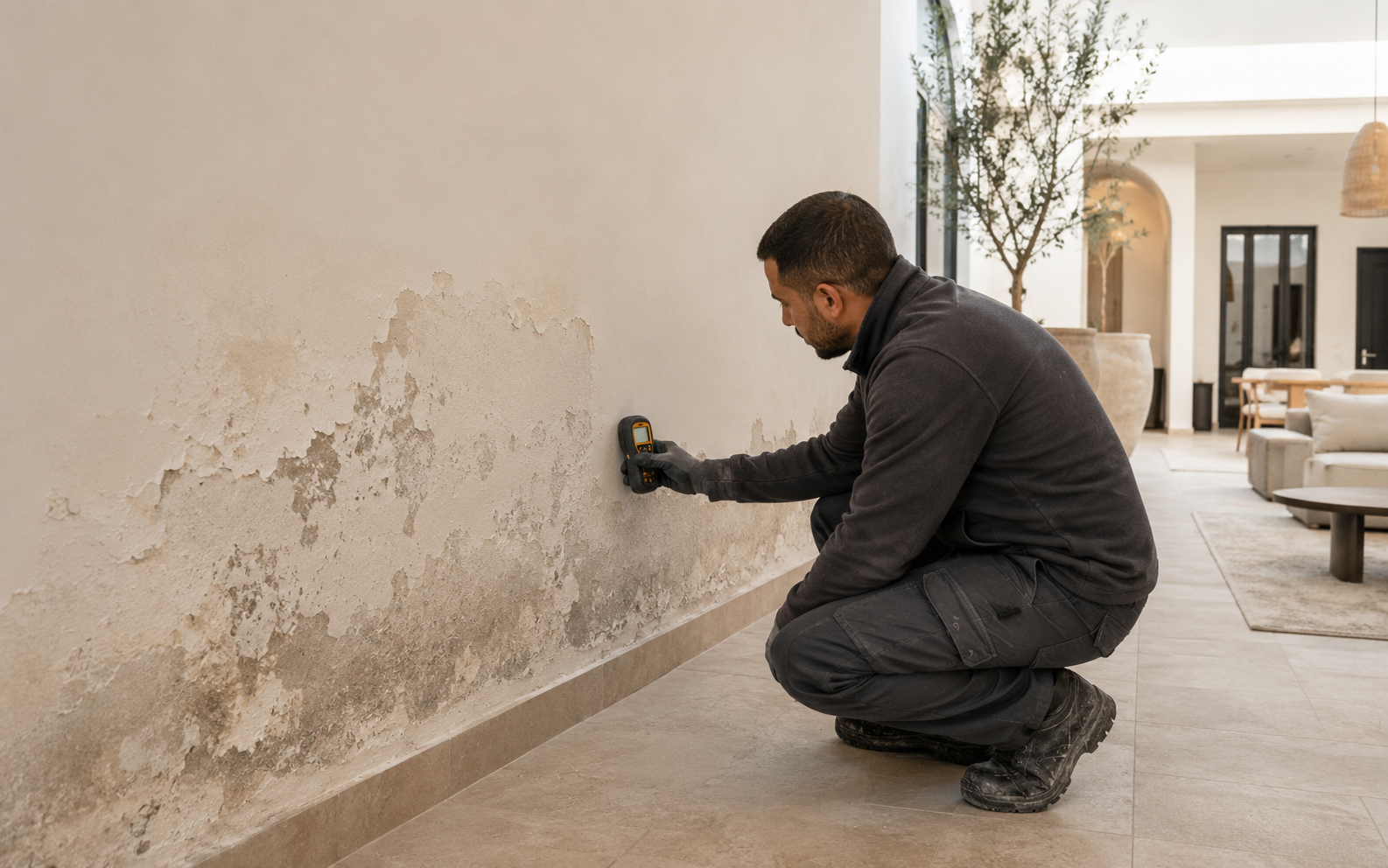
Signs to look for
If you see any of these signs at home, avoid simply repainting. First establish why the wall remains damp.
Blistering paint
Paint lifts, cracks or peels because of moisture in the wall.
Salt deposits & white marks
Whitish deposits can appear when moisture carries salts to the wall surface.
Damp at the base of walls
Moisture concentrated near the floor may suggest rising damp, but the cause must be confirmed.
Mould & odours
Dark patches or a persistent smell can indicate a moisture problem that needs treatment at its source.
If the cause remains, damp often returns
Repainting or replastering may improve the wall temporarily. But if water continues to enter or rise, blisters, salts and staining return.
We therefore identify the cause first. Rising damp, water ingress, leaks and condensation require different treatments.
Recurring damp stains? Send us photographs.
Show us the affected areas, the base of the wall and visible marks. We clearly explain the next step before you commit to work.
How we treat the problem
Before work starts, you know what is causing the damp, what needs treating and the order in which the work will be carried out.
Diagnosing the cause
We examine affected areas and their surroundings to distinguish rising damp, water ingress, leaks, condensation or another source of moisture.
Appropriate treatment
The solution follows the diagnosis. Where genuine rising damp is present, an injected damp-proof barrier may be installed.
Restoring the wall
Once the source is treated, damaged plaster and salts can be addressed gradually, allowing the wall the time it needs to dry.
Treatment depends on what is actually making the wall damp
We do not automatically propose injection or complete wall refurbishment. Treatment is chosen according to the identified cause and actual substrate condition.
Not sure whether it is rising damp?
You do not need to choose the treatment yourself. We first assess the symptoms and probable source of moisture before proposing a solution.
Damp and rising damp treatment prices
The price depends on the moisture source, wall type and treatment required. The scope is defined before work begins.
Damp and rising damp: your questions
What signs can indicate rising damp?
Moisture at the base of walls, salt deposits or deteriorating plaster may suggest rising damp. However, these signs alone do not confirm the cause, as water ingress or a leak can produce similar symptoms.
Why does damp return after repainting?
Paint addresses the wall's appearance, not the water supply. If the moisture source remains, blisters, stains or deposits can return after repainting.
Does the wall always need injection?
No. Injection is an option when rising damp is actually identified. If moisture comes from a leak, water ingress or another cause, a different treatment is needed.
How long does a damp wall take to dry?
Drying is not instant. It depends on wall thickness, moisture levels, ventilation and accumulated water. Finishes must be repaired at the appropriate time, rather than too early.
Do you work on riads and villas in Marrakech?
Yes. We treat damp walls and rising damp in Marrakech riads, villas and other homes after identifying the cause.